
The day a Nordic bird reminded me I live in paradise
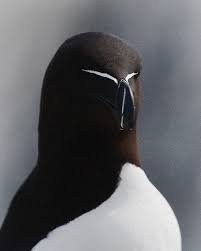
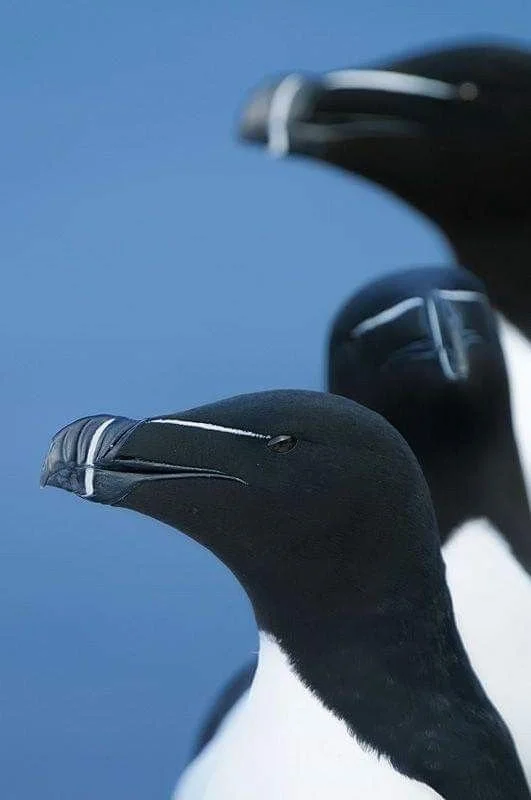
The first time I saw the Razorbill, I felt something strange: a mix of admiration, aesthetic envy, and a subtle how dare this bird be more chic than a person? Perfect black and white, flawless white eyeliner, an attitude that reads I just walked out of a Scandinavian editorial and I don’t need your approval. A polished, almost silent presence, with the same calculated restraint as a Nordic designer billing in peace.
As I watched it, I thought: of course—this is Europe. Cold, minimal, quiet, perfectly curated. A bird that looks like it was designed by a Danish creative director.
And then the uncomfortable question hit me: if I can be mesmerized by a Nordic bird I have never even seen in real life… why am I not equally amazed by the place I actually live in? By the Resplendent Quetzal, the Turquoise-browed Motmot, macaws, toucans—and all this tropical chaos the world calls “exotic” and that, for me, is… just Tuesday.
And that’s when it clicked. It fascinates me because it isn’t mine. Because I had never seen it before. Because it belongs to a world that is cold, quiet, and monochromatic. Northern aesthetics feel exotic to me because I come from a continent that is fire, jungle, color, and rhythm. Surprise lives in what does not belong to your emotional geography.
This text begins there: with a minimalist bird from the North, and with the suspicion that in Latin America we live in paradise—only we’ve been taught to see it as background.


Aesthetic Hegemony: The Colonial Algorithm We Never Questioned
The entire world—including Latin America—grew up with an idea installed without permission: the European as elegant, refined, superior; the tropical as loud, wild, informal. That did not come from nowhere. It is the long echo of cultural colonization. Europe exported its aesthetic as canon, and we—within colonized territories—learned to desire what is external and minimize what is our own.
The result is almost absurd: we marvel at a black-and-white bird, yet ignore that a motmot is kinetic art. We look at a cold forest and say wow, but take for granted a jungle that is the global capital of biodiversity. It is not ignorance. It is historical conditioning. Aesthetic programming. And like any form of programming… it can be unlearned.
Living Inside the Extraordinary
Human beings normalize what they see every day. For someone from El Salvador, seeing a motmot is normal; seeing a macaw is normal; seeing a hummingbird is normal; watching bougainvillea explode in color is part of the landscape. But a Nordic observer would be overwhelmed.
The same happened to me with the Razorbill. It took my breath away—not because it is objectively more beautiful, but because I never encounter it, because its aesthetic is not tropical, because it exists outside my visual geography.
Fascination emerges from that friction: what does not belong to your immediate environment reveals new dimensions of beauty.
Foreigners experience the same when they encounter our colors, our birds, our light, our jungles. Fascination is born from contrast, from difference, from the collision between worlds.
Tropical Birds: A Visual Manifesto of Latin Aesthetics
Tropical birds are not just animals—they are living metaphors of our aesthetic. They are visual manifestos of what it means to be Latin American.
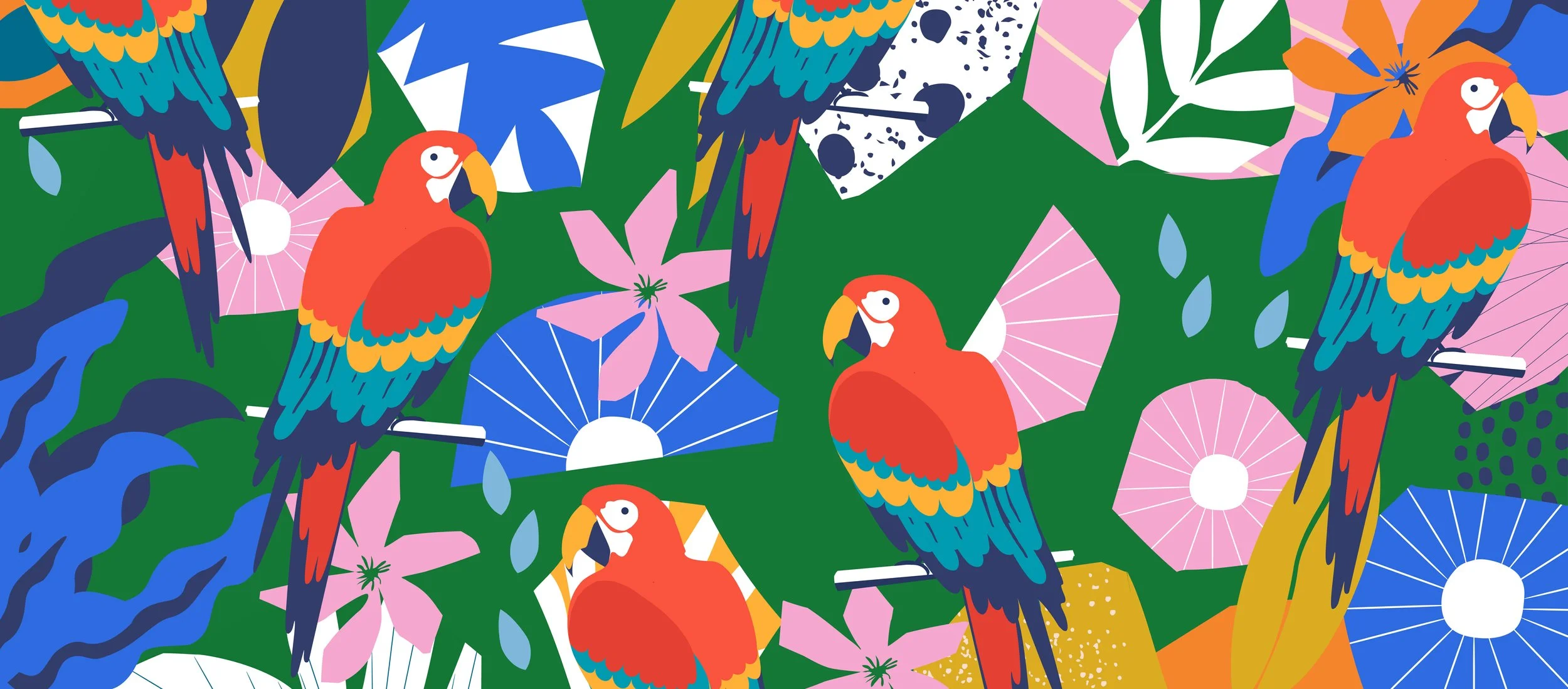
When you think of a Resplendent Quetzal, a Turquoise-browed Motmot, a scarlet macaw, or a toucan, what appears first is color. But not just any color—color with intention, presence, and narrative. It is curated maximalism: excess with discernment, inherited from cultures that never feared intensity, ritual, symbol, or exuberance.
Within them lies the encoded identity of a continent shaped more by jungle than by marble—a continent where aesthetics did not emerge from austerity, but from abundance. Each bird functions as a kind of visual altar: the quetzal as living myth, the motmot as perfect composition, the macaw as cosmic diva, the toucan as a gradient no graphic system can replicate without appearing artificial.
When contrasted with more restrained European birds—like the razorbill—you begin to see two distinct aesthetic pedagogies. The North constructs beauty through restriction: limited palettes, silence, controlled symmetry. It is a minimalism born from geography—snow, rock, climatic uncertainty—a landscape where survival demands visual efficiency. That restraint becomes style, and that style becomes canon.
The tropics operate under a different principle: here, life does not conceal itself—it displays itself. Excess is not noise; it is survival. Intense colors are not decorative; they are language between species. Saturation is not kitsch; it is both ecological function and spiritual expression.
As Néstor García Canclini suggests, our cultures do not organize beauty through purity, but through hybridity—compositions that never asked for permission to exist. Tropical birds embody this border aesthetic: baroque, sensory, and deeply symbolic.
The lesson is clear: while Europe turned “less is more” into a philosophy, Latin America perfected “more—when it has meaning—as an act of identity.”
Our birds do not ask for discretion because they come from a land that was never discreet. And that is precisely where their beauty lies. They do not compete with Nordic sobriety—they destabilize it. They remind the world that there are aesthetics born not from control, but from vitality.
They demonstrate that exuberance can also be sophisticated—when it responds to an ecosystem, to a myth, to a history. That natural drama is as legitimate as Danish minimalism. And that Latin America does not only possess biodiversity—it holds an aesthetic that science can study, art can imitate, and design can transform… but that only territory can produce.
In the birds lies the proof: we are a continent that has never feared color, symbol, or presence. If the North teaches restraint, the tropics teach intensity. And the world, as WGSN has begun to suggest, is finally ready to listen.
The North Is Minimalist. We Are Divine Drama
We were taught—without it ever being said out loud—that the European is “refined” and ours is “folkloric.” That minimalism is elegance and abundance is excess. That black and white is sophistication and color is noise.
Latin American education never taught us to love our own territory. We know more about polar bears than jaguars, more about penguins than motmots, more about Gothic architecture than Mayan art. Not by accident, but by colonial inheritance: we grew up looking outward because no one told us there was beauty within. And yet—we live inside paradise.
When you inhabit the miraculous every day, you begin to take it for granted. Familiarity dulls wonder. The North has its editorial minimalism. We have divine drama.
They have the Razorbill, the puffin, the snowy owl. We have creatures that look like they came out of a dream God had after drinking Pacamara: a Resplendent Quetzal that feels like a living Mesoamerican dragon, a Turquoise-browed Motmot that reads like an impossible editorial cover, a toucan with a gradient no house—not even Dior—could replicate without looking artificial, a macaw that exists to remind the world what the original diva looks like, a hummingbird that feels like quantum physics with feathers, a jaguar that governs entire jungles without saying a word.
While they display restraint, we display life.
While they have white silence, we have sacred fire.
While they have design, we have myth.
Latin America does not compete—it transcends. Because here everything is more alive, more sensory, more spiritual. And of course we celebrate it, because if there is something our writers understood, it is that this continent is not observed—it is breathed. As Rubén Darío wrote with the clarity of someone who knew the ferocity of tropical beauty: “I love my homeland more than my own eyes.”
In the North, aesthetics are designed.
In Tropical America, aesthetics are inherited.
And that is why, when the world grows tired of gray, it turns its gaze toward us—toward a place where every bird, every jungle, every shadow, and every color is a reminder that there are lands where life never learned to be timid.
Americana Tropical: An Aesthetic That No Longer Asks for Permission
WGSN made it clear in its latest 2026 trend report: Latin America is a creative force redefining global aesthetics. It makes sense. While the world grows tired, gray, and saturated, our continent appears as a surge of life: deep color, sensory richness, ancestral narrative, extraordinary flora and fauna, curated maximalism, symbolic depth, presence.
Not the tourist noise of cheap souvenirs. Not the unfiltered saturation we were taught to call “tropical.” But the refined curation of what we truly are: a territory where beauty is not a trend—it is nature.
The future is not the North.
The future is tropical—but sophisticated.
It is Americana Tropical: the tropics that stopped apologizing for existing.
That Nordic bird reminded me what happens when something surprises you—when something is not yours, when something is new. But the real magic lies in learning to see, with those same eyes, what already lives at home: a continent made of myth, poetry, fire, jaguar, quetzal, and macaw. A territory that breathes art without trying.
And we are part of that lineage.
We are Americana Tropical.
And the world—quite literally—is about to discover it.
