

The symbolic as a structure of meaning — a perspective from communication and anthropology
From the earliest stages of human history, rituals have functioned as symbolic technologies—tools to produce cohesion, meaning, and social order. Long before algorithms existed, there was fire at the center of a circle. Bodies moving around it. Crowns, rings, flags.
They were never decoration.
They were language—without words.
Anthropologists like Victor Turner and Clifford Geertz understood rituals as cultural performances that don’t simply express shared values—they create them. And it is precisely in that creation of reality where communication enters the conversation.
In the field of communication, Erving Goffman argued that we are constantly performing roles within symbolic stages. Identity is not fixed—it is constructed and sustained through signs, routines, and repetition.
Like in theatre, wardrobe, tone of voice, and the objects around us are not neutral. They position us—before others, and before ourselves.
As Roland Barthes warned, even the most trivial gestures—a manicure, a glass of wine, a mirror selfie—can operate as modern mythologies, loaded with ideological and emotional meaning.
In other words, what we do ritualizes who we are. And more importantly, it tells our brain who it believes we are.
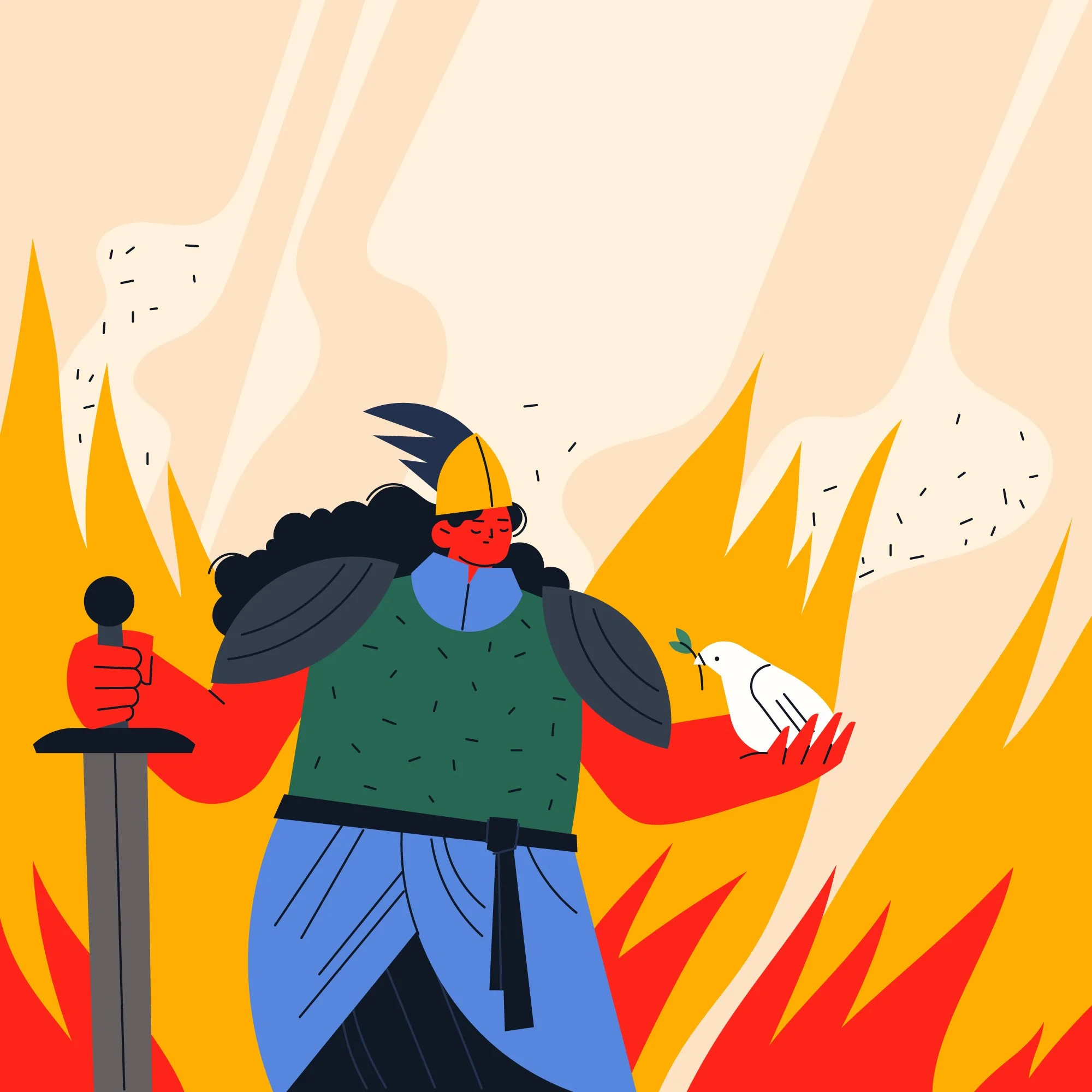
From Tribe to Zoom: The Evolution of What Holds Us Together
Rituals and symbols have existed for as long as humans have needed to belong. They are not objects. They are representations of something larger.
A fire at the center of a circle.
A greeting gesture.
Mourning clothes.
An anthem before a game.
These are symbolic forms that organize human experience. They tell us—without words—who we are, what is expected of us, and what we are allowed to feel. But something shifted.
From Solid to Liquid: Symbolic Instability
With the rise of what Zygmunt Bauman called liquid modernity, the world became faster, more fluid, more unstable.
You are no longer born into a single role. There is no singular aesthetic. No single way of being successful, masculine, feminine, or fulfilled. Everything is freer. But also… more uncertain.
And here’s the twist: In a liquid world, symbols don’t disappear. They become personal. What used to be a collective ritual is now replaced by intimate, self-designed practices.
Modern Rituals: The Micro-Choreography of the Self
A cup you only use when writing. A perfume you apply before a meeting. A lipstick you wear—not for beauty, but as a reminder that you are not asking for permission. That is a ritual. In this era, rituals are not inherited. They are designed.
Each of us is tasked with creating our own symbolic anchors—not because we are alone, but because belonging now begins within.
Why Your Brain Believes in Rituals
A ritual doesn’t require incense or candles—although it can. A ritual is any repeated action infused with symbolic intention. Something small. Ordinary. But treated as sacred. And even if you know it’s “just a cup” or “just a lipstick,” your brain doesn’t.
To your brain, repetition plus emotional charge equals reality. The symbolic becomes biological. The repeated gesture rewrites internal narrative.
The body performs it.
The brain believes it.
The ego sustains it.
What begins as detail… becomes identity.

Identity as a Political Act
We care about rituals because existence without meaning is unsustainable. If you don’t design your identity, someone else will. In a world of overstimulation and infinite scroll, the only real anchor is knowing who you are—or at least, who you choose to be today.
Identity is no longer inherited. It is carved, daily, through the symbols you choose to sustain. And in a liquid world, that is a deeply political act.
Who Shapes Identity Today?
It used to be the Church. Then the family. Then the State. Now? Identity is a distributed battlefield:
Advertising suggests
Algorithms select
The environment reflects
And you, in the middle, negotiate
But here’s the truth: If you don’t ritualize who you are, you become the result of what others project.
Is Identity Power? Absolutely.
In a world where everything is content, the self is too. Not as branding. Not as performance for approval. But as symbolic structure.
The person who sustains identity from within—without constant validation—holds a form of power that cannot be bought. Power is not loud.
Power is knowing your value without needing to prove it.
The Hidden Power of the Symbolic
The wealthy don’t just buy watches—they buy time and status
Companies don’t just create logos—they build totems of power
People don’t just dress—they costume themselves into who they want to become
And the most important part: You can do this too. Even without the perfect environment, you can use symbols to reshape how you perceive yourself, how you act, and what you tolerate. This is not deception. It is narrative. And well-constructed narrative always wins.

The Sign, the Symbol, and the Self
According to Ferdinand de Saussure, a sign is composed of a signifier (form) and a signified (mental concept). The relationship between them is not natural—it is constructed. Umberto Eco expanded this idea: everything can become a sign. A dress. A brand. A posture.
In a world saturated with meaning, sense is no longer discovered. It is built. Which means identity becomes an open text—one you must write, and more importantly, sustain.
Every time you choose a symbol—a gesture, an object, a routine—to reinforce your internal narrative, you are not playing. You are creating a semiotic anchor your brain interprets as truth.
Repeated with intention, it becomes self-image. Then behavior. Then power. Because symbolic power is not imposed. It is embodied.
The world is not made of facts alone. It is made of symbols. And in an era of noise, those who master symbols don’t need to raise their voice. Their presence communicates. Their silence has structure. And their identity—though fluid—takes form.
