
The Making of Normal
How advertising turns commercial strategies into habits.
You replace your phone even though it still works. You have a specific bottle for drinking the water you once drank from a glass. Your skincare routine includes products you did not know existed ten years ago. Waiting four days for an online order is starting to feel like too long. There are clothes for working out, relaxing, working from home, and projecting that you are the kind of person who works out, even if you have not exercised today.
None of this feels particularly strange. That is the point.
Much of what we do every day entered our lives without ever needing to be imposed. No one decreed that an engagement required a diamond, that women should remove their underarm hair, or that a proper breakfast needed a glass of orange juice. Nor is there a rule requiring us to replace a perfectly functional phone because the next one has arrived, follow a ten-step skincare routine, or turn a water bottle into an object of desire.
And yet, somewhere along the way, many of these decisions stopped feeling like decisions.
Advertising has a far more interesting ability than simply persuading us to buy something. It can teach us what to expect, what to desire, what to consider clean, romantic, healthy, modern, feminine, successful or even normal. When it does this for long enough, the product can disappear from the advertisement while the idea remains embedded in the culture.
Then something extraordinary happens: we forget that someone once had to sell it to us.
Campaigns end. Advertisements age. Slogans disappear from circulation. Companies change. But some of the behaviours they helped establish survive for generations, until they acquire the appearance of customs that have simply always been there.
Contemporary strategies have learned to do this with even greater subtlety. They no longer need to tell us explicitly that something is wrong with us. They can simply show us a slightly healthier, more efficient, more beautiful, more current or more interesting version of who we could be.
The product sits conveniently in between.
That is why some of our most ordinary habits may be worth examining with a little suspicion. Not because every desire is manipulation, or because consumption makes us victims of some invisible machine. We have agency, taste and judgement. But our decisions do not emerge in a vacuum either.
Some have been cultivated for decades.
Others are only a few algorithms ahead of us.
And some of the most successful campaigns in history no longer need to be running at all.
We are still running them ourselves.
The Price of Forever
Few things seem as naturally intertwined as a marriage proposal and a diamond ring.
The scene is so firmly established that we can complete it without seeing it: someone gets down on one knee, a small box appears, there is a diamond inside, and a story intended to last forever begins. We can change the country, the restaurant, the clothes or the way the question is asked. The object remains.
But a diamond was not always a cultural requirement of engagement.
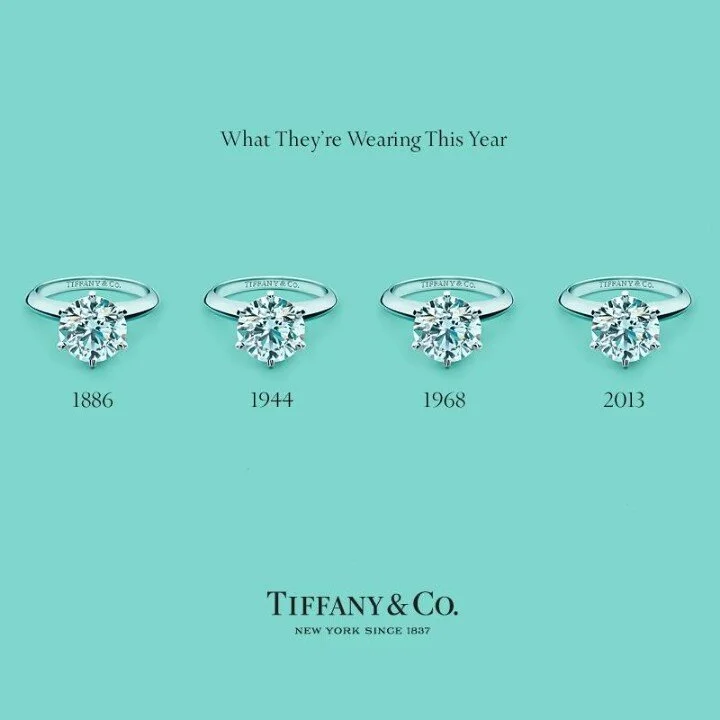
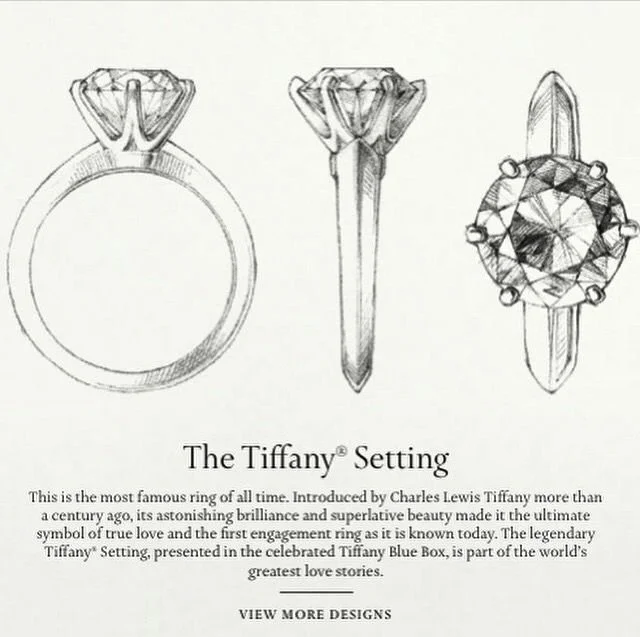
Rings had been part of marriage rituals for centuries, and diamonds were already worn by European elites long before modern advertising existed. Tiffany & Co. helped transform their presentation in 1886 with the Tiffany Setting, which raised the stone on six prongs and made the diamond the undisputed centrepiece of the ring.
The association we now recognise between diamonds, engagement and everlasting love, however, required a much larger operation.
By the late 1930s, De Beers faced a commercial problem: there were diamonds, but not enough reasons for millions of people to feel they needed one. Together with advertising agency N.W. Ayer, it began creating them.
The strategy was remarkable because it went far beyond advertising jewellery. Diamonds were woven into love stories, celebrity culture, cinema, the press and conversations about marriage. The stone began to function as a visible symbol of commitment and, eventually, as an indication of how much that commitment ought to be worth.
In 1947, one of the most successful advertising lines of the twentieth century appeared: A Diamond Is Forever. Four words solved several problems at once.
A diamond could represent a marriage because both were meant to last forever. If love was permanent, parting with the stone seemed inconsistent with what it represented. And if an emotion that could not be measured could instead be expressed through an object, the price of that object could acquire a significance far beyond its material properties.
Then came an even more revealing commercial idea: how much someone should spend on the ring.
De Beers campaigns gradually linked the price of a diamond to a proportion of the buyer’s salary. A financial decision began to take on the appearance of an emotional measure.
There was no need to say that a man loved more because he spent more.
It was enough to create a context in which spending less could begin to mean something.
That is what makes the De Beers case so fascinating. The campaign did not invent marriage, rings, diamonds or the human desire to represent love through objects. It took elements that already existed and arranged them into a relationship so powerful that, decades later, it can still seem older than advertising itself.
Today, someone can buy an engagement ring without knowing anything about De Beers, without ever having seen one of those advertisements, and without knowing who wrote A Diamond Is Forever.
The campaign no longer needs to be present.
The expectation does.
The Invention of the Proper Breakfast
Few decisions seem less ideological than having breakfast.
We open a box of cereal, pour in some milk, add a glass of orange juice and rarely stop to wonder who decided those foods belonged to the morning. Elsewhere in the world, the first meal of the day might include rice, soup, fish, beans, bread, cheese or practically anything that could just as easily appear at lunch.
But for much of the twentieth century, the American food industry achieved something remarkable: it did not simply sell breakfast products. It helped define what breakfast was supposed to look like.
Cereal is one of the clearest examples.
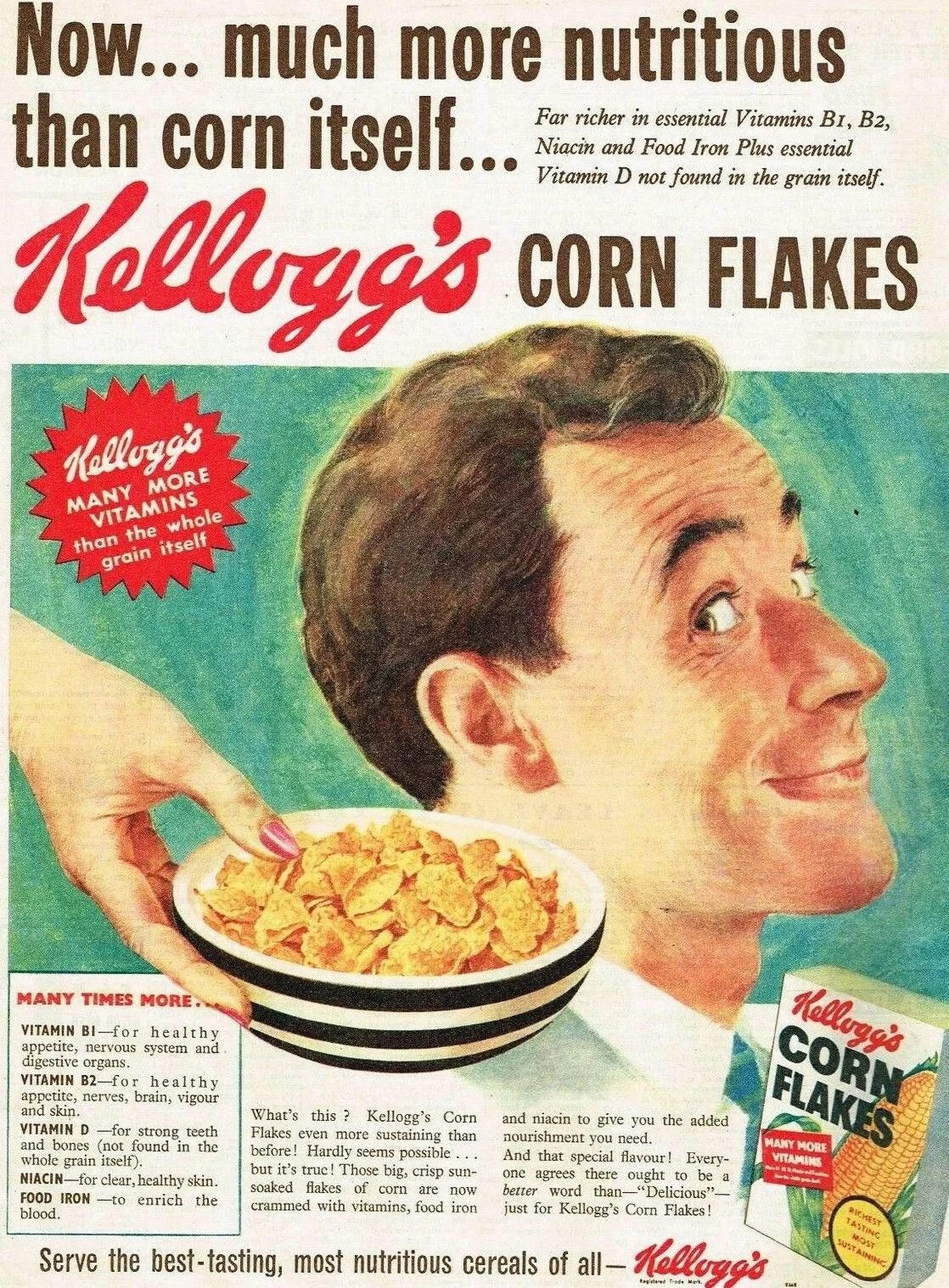
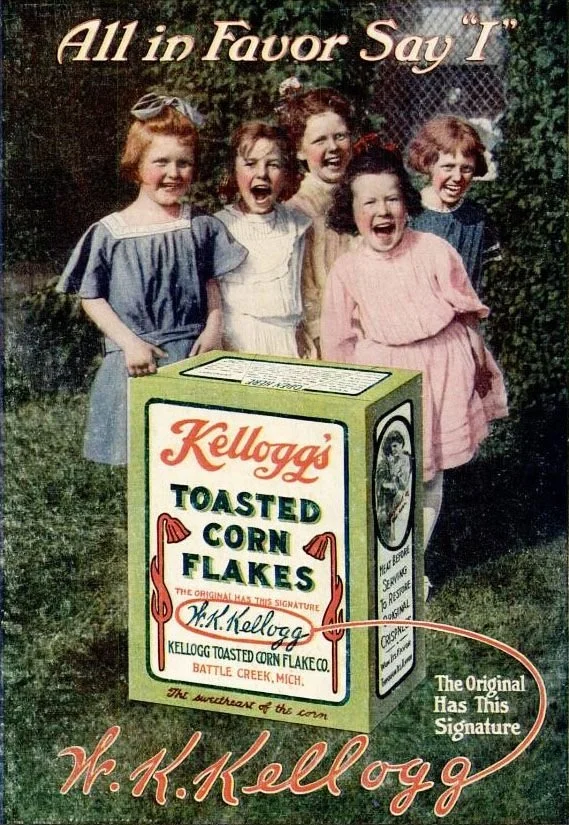
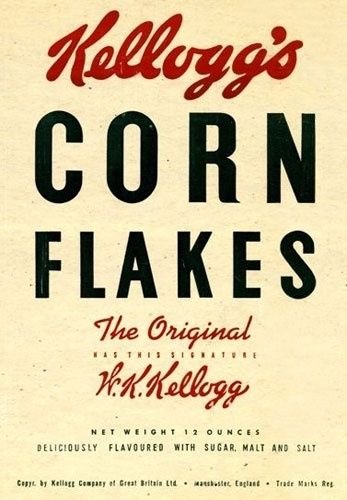
The first commercial breakfast cereals emerged in the late nineteenth century, connected to food reform movements and the search for simpler meals than those commonly found in certain American breakfasts. John Harvey Kellogg developed corn flakes within this context; his brother, W.K. Kellogg, saw something bigger: a product that could be manufactured, packaged, promoted and delivered to millions of tables.
The industry grew, and cereal stopped being merely an alternative food. It became a category of its own, complete with characters, colours, prizes inside boxes and decades of advertising aimed at families and, especially, children.
Morning now had a product designed specifically for it.
Orange juice took a different route to the same destination.
In the early twentieth century, the expansion of the American citrus industry produced more fruit than could easily be sold in its original form. Turning oranges into juice offered a way to use more of the crop, but the habit of drinking it still had to be established.
Vitamin C provided the perfect narrative.
Orange juice began to be promoted as a healthy addition to the diet and eventually secured a privileged place at the American breakfast table. The development of frozen concentrate after the Second World War also made it much easier to preserve and distribute.
Gradually, cereal, milk, coffee and orange juice formed an image so familiar that the combination began to seem self-evident. But another industry was interested in deciding what should happen in the morning.
In the 1920s, Beech-Nut wanted to sell more bacon and turned to Edward Bernays, one of the great architects of modern public relations. Bernays found a particularly elegant way to promote it: rather than asking the public whether they wanted to eat more bacon, he asked a doctor whether a substantial breakfast might be preferable to a light one.
The favourable response became the basis for a survey of thousands of doctors and, later, material for the press. Bacon and eggs appeared as an example of this more substantial breakfast. The strategy matters because the product no longer seemed to be speaking for itself. Authority was speaking for it.
A company wanted to sell bacon, but the story reaching consumers was about health, doctors and the importance of starting the day properly. Different industries could therefore compete for the same meal using apparently different arguments: convenience, nutrition, energy, health, modernity. Each was trying to establish its products within a routine that would, ideally, be repeated every morning.
And there lies one of marketing’s most powerful ambitions. Selling something once is good business. Turning it into a habit is much better. Because once a category manages to claim a particular moment of the day, it no longer needs to persuade the consumer from scratch with every purchase. Breakfast calls for cereal. Morning calls for coffee. The glass beside the plate calls for juice.
Habit begins to do some of the work advertising once had to do.
It matters little whether today we prefer eggs, cereal, fruit or simply coffee. Nor does it mean those choices are somehow false because an industry helped popularise them.
What is interesting is recognising that even a routine as intimate and seemingly mundane as deciding what to eat when we wake up can carry decades of commercial interests, technological developments and carefully constructed narratives behind it.
Sometimes advertising does not need to invent a need. It only needs to secure a permanent place at the table.
When Brands Enter Our Rituals
Routines have an obvious commercial advantage: they repeat themselves. Rituals offer something even more powerful: they mean something.
Christmas, Mother’s Day, birthdays, anniversaries and other celebrations existed long before brands discovered their potential. They did not need to be invented. They already possessed something far more valuable than any campaign could create from scratch: memory, affection, identity and repetition. The opportunity was to learn how to participate in them.
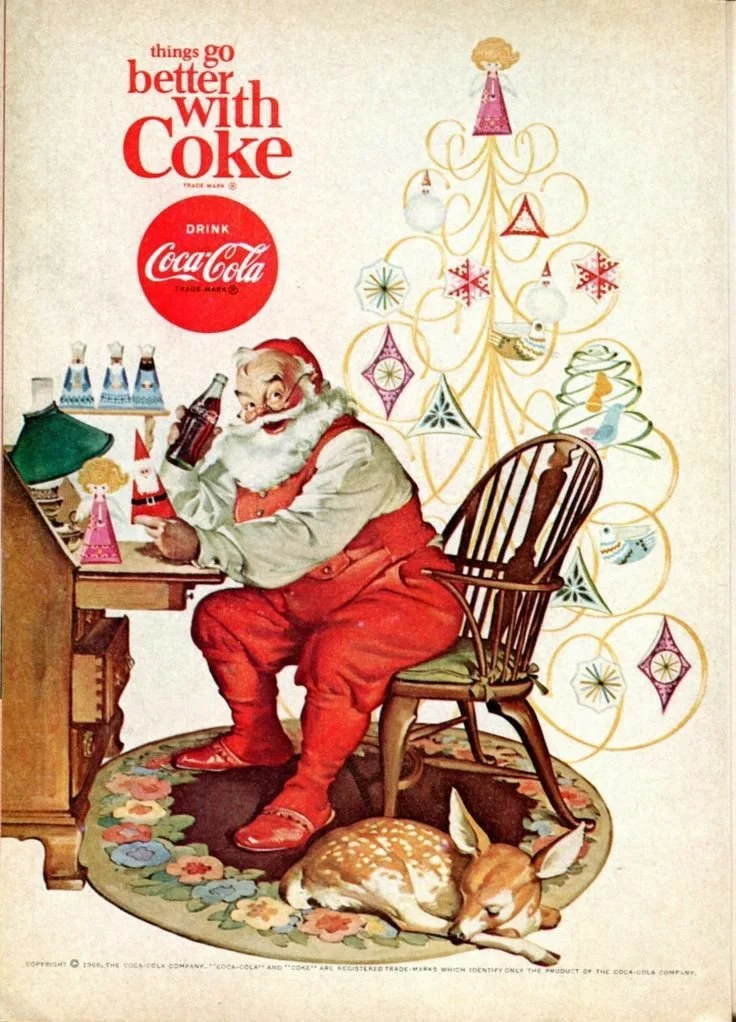
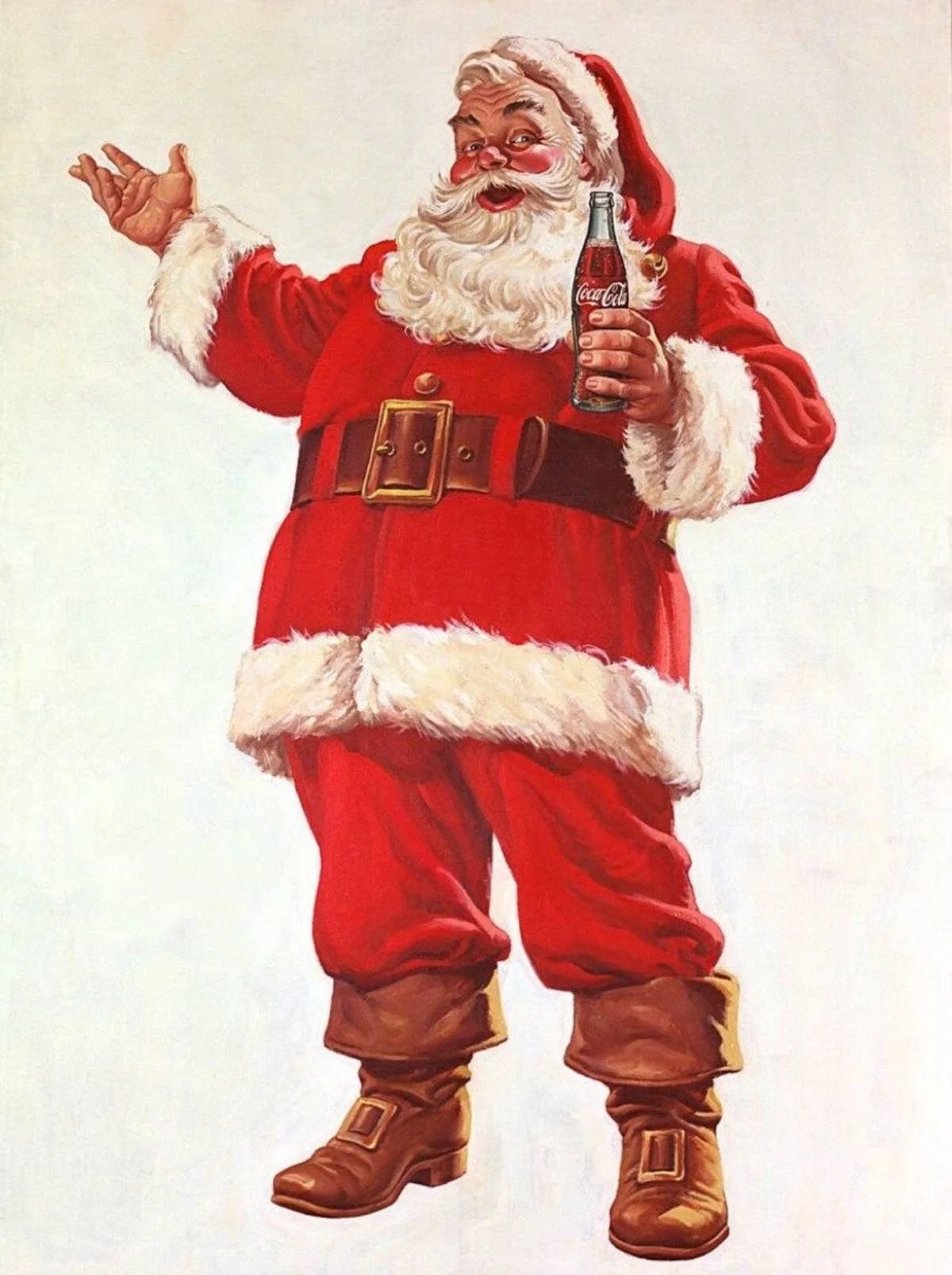
Santa Claus is probably one of the best-known examples, and also one of the most oversimplified. Coca-Cola did not invent Santa Claus. Nor did it invent his red suit. Different representations of St Nicholas and Santa were already circulating throughout the nineteenth century, and artists such as Thomas Nast had helped develop many of the characteristics we recognise today.
What Coca-Cola did from 1931 onwards was something else. The company commissioned illustrator Haddon Sundblom to create a series of Christmas advertisements portraying Santa as a large, warm, smiling and deeply human figure. He drank Coca-Cola, visited homes, looked inside refrigerators, rested during his journey and appeared in domestic scenes that were repeated for decades.
The enormous reach of those campaigns helped consolidate one of the most recognisable representations of Santa in popular culture. Coca-Cola did not create the character. It helped make one particular version of him seem definitive.
That distinction matters because it reveals a different ability of advertising. A brand does not need to invent a tradition in order to benefit from it. It can enter an existing story, repeat its interpretation for long enough and eventually become part of how entire generations imagine it.
Mother’s Day offers an even better irony. Anna Jarvis campaigned in the United States for the creation of a celebration dedicated to mothers after the death of her own. Her campaign succeeded: in 1914, Woodrow Wilson officially proclaimed the second Sunday in May as Mother’s Day. And then the market did what it knows how to do.
Florists, greeting card manufacturers, confectioners and other businesses found in the new celebration an extraordinary opportunity to sell. Affection now had a recurring date, and commercially recognisable ways of expressing it began to take shape around it. Flowers. Cards. Chocolates. Gifts.
Jarvis eventually came to despise what the celebration she had helped create had become. She protested against its commercialisation and openly criticised the industries that, in her view, were exploiting its sentiment. Her problem was not that people loved their mothers. It was that the market had learned to offer them objects through which to prove it.
Here, a particularly interesting transformation begins to emerge: buying stops being merely a transaction and starts functioning as language.
Flowers can say I love you. A gift can say I thought of you. A diamond can say I want to spend my life with you. A wrapped box beneath a tree can become visible evidence that Christmas happened the way Christmas was supposed to happen.
None of this makes the feelings any less genuine. Someone can give flowers with sincere affection, choose a ring with enormous care or spend weeks searching for the perfect gift. Objects have always played a role in our relationships and rituals. But the market has an extraordinary ability to observe these codes, organise them and then offer them back to us as categories of consumption. With enough repetition, even the absence of the object can begin to feel significant.
Arriving without a gift. Not sending flowers. Forgetting the card. Buying nothing for an occasion that, in theory, celebrates something that should not require a purchase.
At that point, advertising has achieved something far more valuable than our attention. It has secured a place within the ritual.


When a Cause Becomes a Market
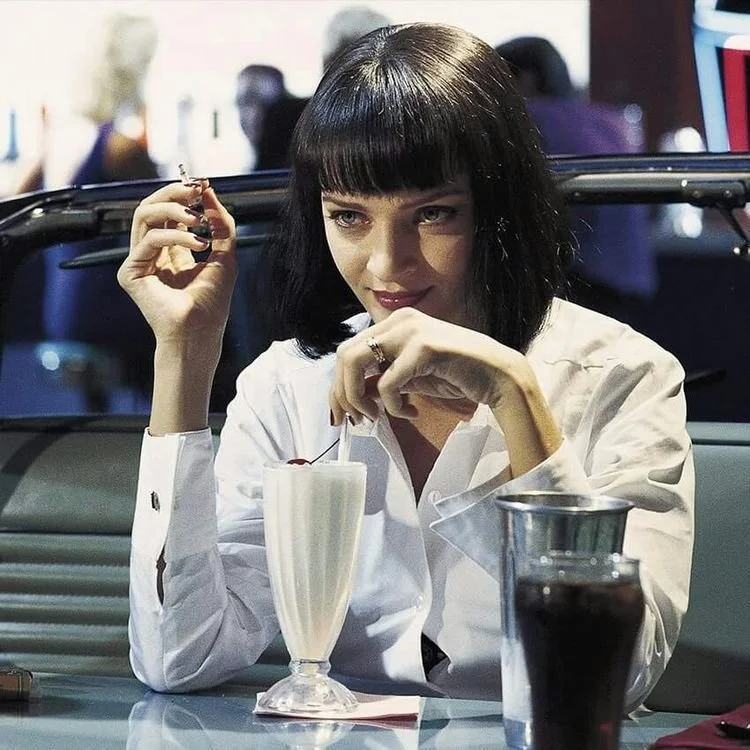
There is something more powerful than making a product part of a custom. Making it represent an idea. During the early decades of the twentieth century, cigarette smoking was already widespread among American men. Women, however, faced strong social restrictions. Smoking in public could be considered vulgar, improper or incompatible with the prevailing image of feminine respectability.
For the tobacco industry, that social norm had a very tangible consequence: a vast portion of the population remained outside the market. Changing it could mean millions of new consumers.
In 1929, Edward Bernays was working for American Tobacco, the manufacturer of Lucky Strike, when he orchestrated an event that would become one of the most famous episodes in the history of public relations.
During New York’s Easter Parade, a group of women publicly lit cigarettes after the press had been alerted that suffragists would be staging a protest. The cigarettes were presented as “Torches of Freedom.”
The choice of words did much of the work.
A cigarette could stop representing behaviour considered inappropriate and become a symbol of independence. Lighting one in public could be read as a small act of defiance against the rules determining what a woman could and could not do.
The inequality was real. So was the freedom those women were claiming. The product found a way to position itself in between. This is one of the most sophisticated mechanisms a brand can use. It does not need to invent the social conversation. It can observe an existing tension, understand where culture is moving and build a bridge between that aspiration and whatever it wants to sell.
The result is particularly powerful because questioning the product can begin to resemble questioning the idea it represents.
It was not simply about smoking. It was about who had the right to do it.
Decades later, the strategy remains uncomfortably familiar. Brands speak of empowerment, diversity, rebellion, authenticity, sustainability, wellbeing and social transformation. Some support those ideas with meaningful decisions. Others find in them a useful language for selling. The difference does not always fit inside an advertisement.
That is why the Torches of Freedom case matters far beyond the tobacco industry. It demonstrates that a brand can appropriate the codes of cultural transformation without having created the need for that transformation in the first place.
It can even help accelerate a change that, in another context, we might consider positive. Women gained access to a public space that had previously been restricted to them. They also began buying more cigarettes. Both things can be true at the same time.
And perhaps that is where one of advertising history’s most uncomfortable questions lies: what happens when a company discovers that our ideals can also become a growth strategy? Because once the market learns how to sell freedom, there is no reason for it to limit itself to selling products.
A Body with a Deadline
Some needs work better when they come with a deadline. For decades, magazines, gyms, food brands, diet products and the beauty industry built a particularly profitable idea around summer: the body needed to be prepared before it could be shown. The concept was eventually distilled into an extraordinarily efficient expression: bikini body.
The phrase appears to describe a type of body. In reality, it describes a relationship with time. Summer is approaching, the holiday is booked, the swimsuit is waiting, and changing the body suddenly becomes urgent.
The commercial logic is brilliant: it transforms an indefinite aspiration into a project with a deadline. Exercise routines, diet plans, slimming products, self-tanners, hair removal and aesthetic treatments could return every year as solutions to a need that, conveniently, also returned every year. The body became seasonal.
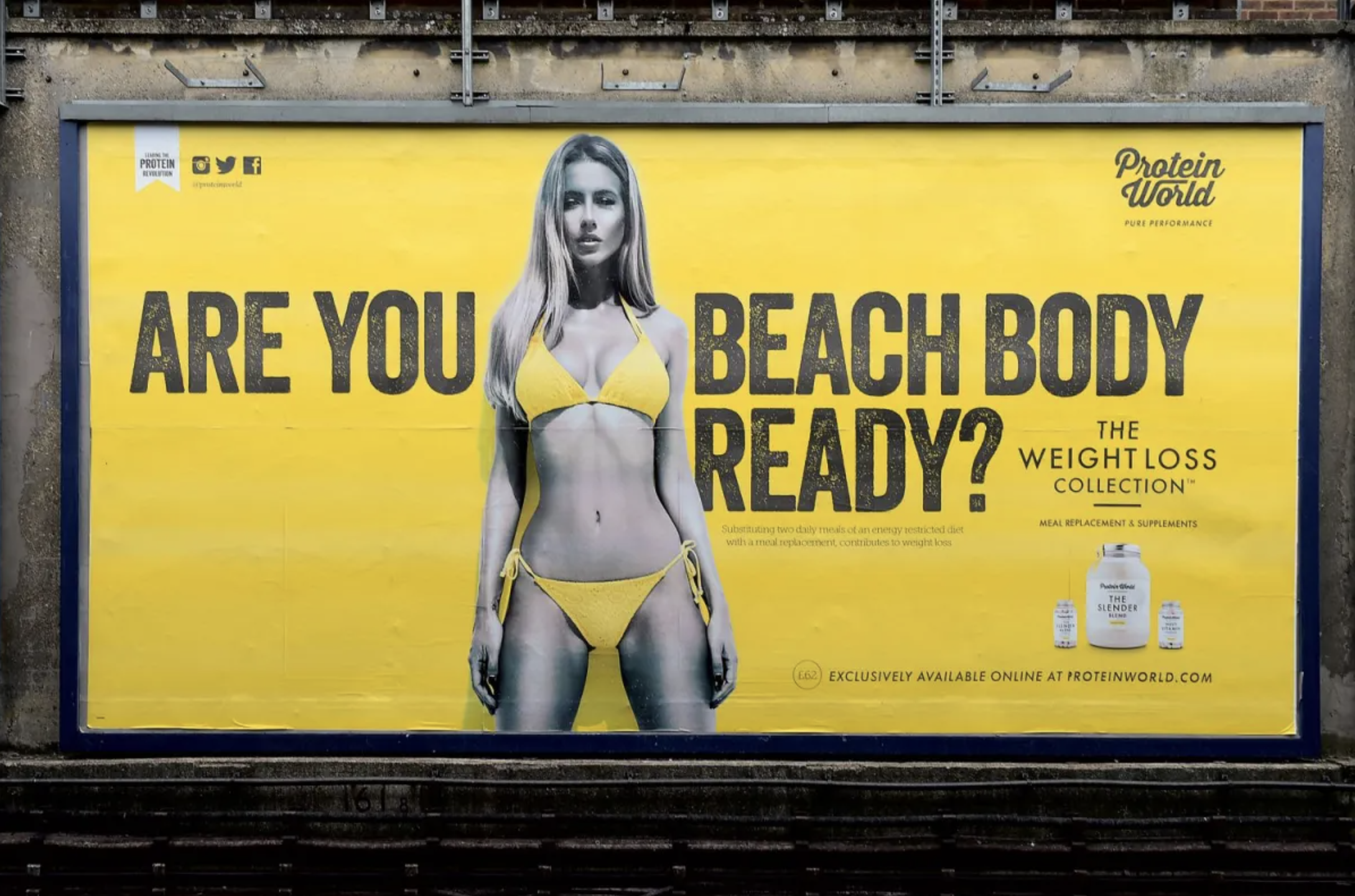
In 2015, that logic became particularly visible when Protein World covered London Underground stations with a question: “Are you beach body ready?” alongside an image of a model in a bikini. The campaign prompted protests, defaced advertisements and a wider public conversation about the body standard embedded in the question.
The campaign had not invented the concept. It had simply made explicit an expectation that had been circulating for decades.
In Latin America, the construction of the desirable body also developed its own codes. Television, beauty pageants, the aesthetics industry and, in certain contexts, narco culture helped consolidate silhouettes in which particular proportions could communicate more than beauty. The body itself could become evidence of status, access and economic transformation.
There is, therefore, no single body that the market has tried to sell us. Every culture negotiates its own ideals, and industries learn to recognise them, amplify them and offer ways of attaining them.
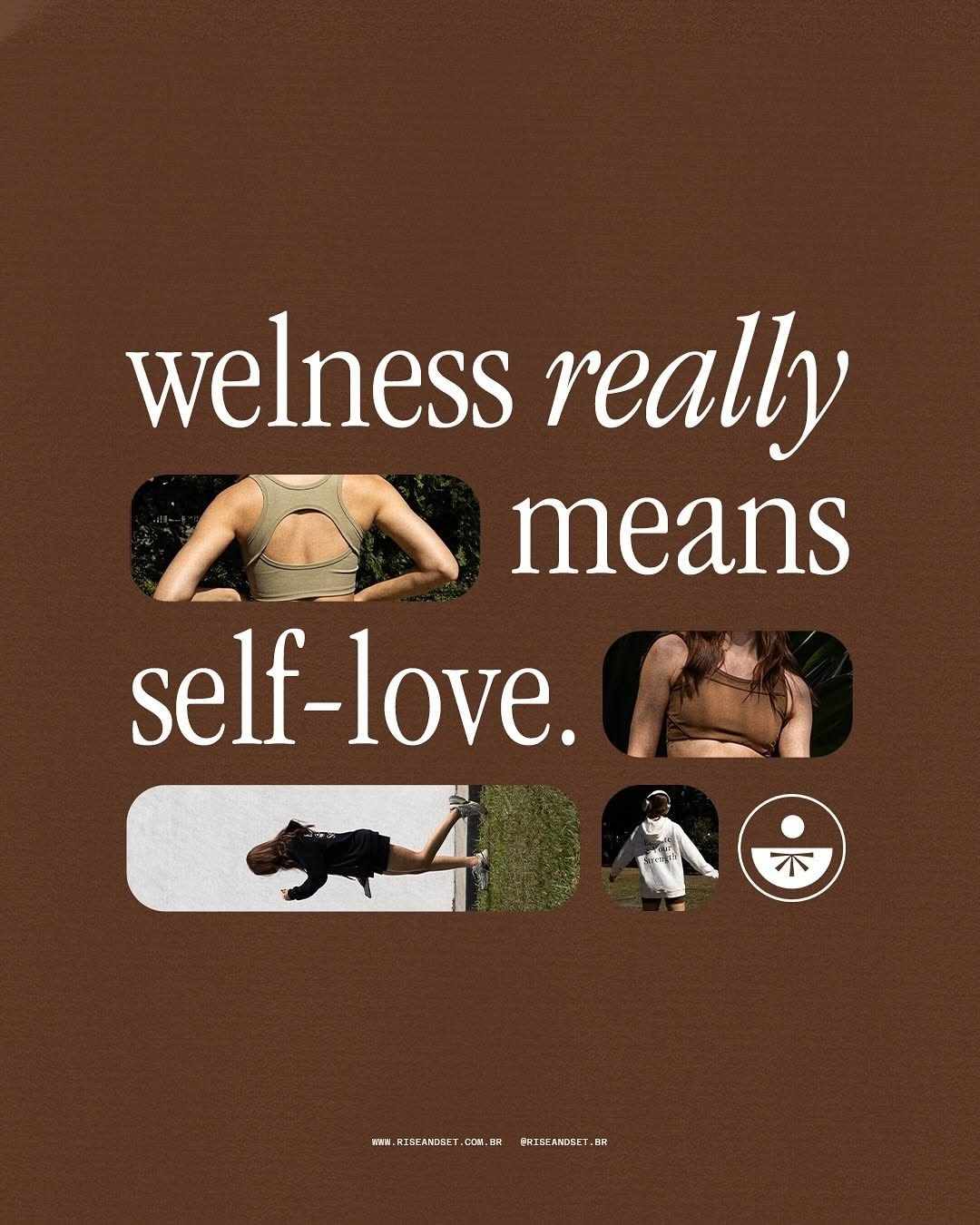
Over time, bikini body began to sound outdated to many audiences. The language became gentler: wellbeing, strength, confidence, movement, feeling good. Part of that shift reflects genuine cultural change. It also demonstrates that the market knows how to update its vocabulary.
Today, we no longer need to wait for summer. We can optimise the body, the skin, sleep, productivity, our wardrobe and even the way we drink water. The deadline disappeared. The project became permanent.
We Are Still Inside the Campaign
It is easy to recognise a campaign when it belongs to the past. We have the advertisements, we know the strategy, and we can observe its effects from decades away. It is easy to look at a diamond, a breakfast or an old cigarette advertisement and reconstruct the commercial decisions that helped turn them into symbols and customs.
The campaigns shaping our own habits are harder to recognise. We are still living inside them. Consider the phone in your hand.
For a long time, replacing a device meant that it had stopped working, broken down or that a sufficiently significant improvement existed to justify the change. Today, much of the technology industry operates around predictable release cycles: every year brings a new generation, accompanied by comparisons, reviews, events, content and conversations about everything it can now do better.
The previous phone does not need to stop working. It only needs to start feeling previous. That distinction matters. Obsolescence can be technical: a battery that no longer performs, an operating system that stops receiving support, an incompatible application. But it can also be cultural.
A perfectly functional device can begin to feel old simply because another one now occupies the position of the new. The practical difference between them may be small, while the symbolic distance feels enormous.
And the mechanism extends far beyond technology.
A water bottle can become a collectible. A basic skincare routine can multiply into cleansers, toners, essences, serums and treatments. Sleep can require a watch, a ring, an app and a score that tells us in the morning how well we rested.
Even things we once did for free can acquire a category, an aesthetic and an entire collection of products around them.
Drinking water becomes hydration.
Sleeping becomes sleep optimisation.
Getting dressed becomes an aesthetic.
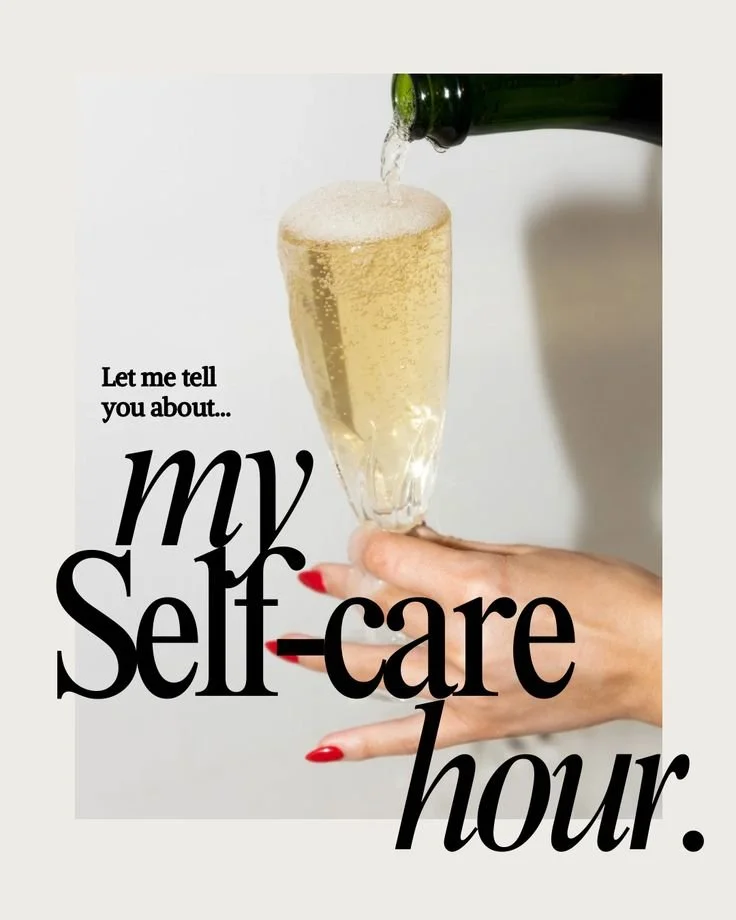
Resting becomes self-care.
Taking care of ourselves has always required time, resources and knowledge. What is new is the ease with which every dimension of life can be fragmented into new opportunities for consumption.
And the more intimate the activity, the more interesting the transformation becomes. Because we are no longer buying only things that do something. Increasingly, we are buying things that say something about who we are.

When Buying Becomes Personality
For a long time, brands promised that their products could say something about us. Today, they can help us construct entire personas.
The water bottle is an almost perfect example. Drinking water could hardly be a more basic activity, yet within just a few years we have watched Hydro Flask, Stanley and Owala take turns as objects capable of communicating aesthetics, generational belonging and lifestyle. The function remains virtually unchanged. The meaning shifts.
Something similar has happened with coffee. Simply drinking it is no longer necessarily enough. We can choose the origin of the beans, the brewing method, the grinder, the machine, the cup and the place where we buy it.
An everyday need becomes a ritual, and the ritual becomes identity. Fashion has operated according to this logic for decades, but social media has accelerated its pace. Clean girl. Old money. Coastal grandmother. Mob wife. Quiet luxury.
Each aesthetic proposes colours, clothes, objects, places and behaviours capable of constructing a recognisable version of the person who adopts it. A wardrobe no longer needs to wear out before it needs replacing.
It can simply stop telling the right story.
Quiet luxury is particularly interesting. As logos and overt displays of wealth began to be perceived as vulgar within certain cultural codes, the market found another way to sell status: seemingly understated clothes, exceptional materials, impeccable cuts and objects whose price is apparent only to those who know how to recognise it.
Even appearing uninterested in displaying wealth can require buying the right things.
Social media added another layer: speed.
A trend once needed seasons to spread. Now an aesthetic can appear, acquire a name, generate thousands of pieces of content, produce shopping lists and begin to fade while we are still learning how to pronounce it. Identity becomes updatable. And that possibility is commercially extraordinary.
If the products we own help tell the story of who we are, no longer identifying with them can become reason enough to replace them. They do not need to be broken, worn out or empty.
It is enough that we are no longer that person. Consumption therefore finds an almost inexhaustible source of renewal: ourselves. Because people change, aspire, experiment, belong, grow bored and begin again. And there can always be an object waiting to prove it.
Someone Sold That Normality
After all of this, it would be easy to arrive at a rather poor conclusion: advertising manipulates us, and we buy. That is not the point.
People are not empty vessels waiting for a campaign to tell them what to want. We choose, reject, reinterpret, appropriate symbols and construct meanings of our own. A brand can spend decades trying to establish a behaviour and fail. That is precisely what makes it extraordinary when it works.
De Beers did not need every generation to remember its advertisements for the diamond to remain associated with commitment. Food industries do not need to explain to us every morning why certain products belong at breakfast. Coca-Cola does not need to claim authorship of Santa Claus to have played a role in consolidating the way we imagine him. And no brand needs to force us to replace a phone that still works if we have learned to perceive what came before as old.
At that point, talking only about advertising stops being interesting. We are talking about culture.
A campaign can sell millions of units and disappear without leaving much of a trace. Another can introduce an idea that outlives the budget, the slogan, the medium in which it appeared and even the people who created it.
That possibility should make us take brands a little more seriously.
Those who build brands do not work only with products, typefaces, advertisements or conversion metrics.
They work with meaning.
They participate, however modestly, in constructing what a society learns to consider desirable, appropriate, aspirational, shameful or normal.
Sometimes the result is trivial.
Sometimes it ends up sitting on our table, stored in our bathroom, placed on our finger or embedded in the way we imagine love, success, beauty and care.
Knowing the commercial origins of a custom does not require us to abandon it.
We can still want the diamond.
We can still eat cereal for breakfast.
We can buy the new phone simply because we feel like it.
The difference lies in knowing that a preference and a truth are not the same thing.
Just because something is customary does not mean it was inevitable.
And when a behaviour feels completely natural, that may be the clearest evidence that someone did an extraordinary job constructing it. The most successful campaigns are not always the ones we remember. They are the ones that, long after they disappear, manage to make us forget they were ever campaigns at all. Then we stop seeing the strategy. And we call it normality.
