
How People Change Before the Economy Does
There is something strangely human about trying to predict the future by observing things that, in theory, should tell us absolutely nothing.
Economists have interest rates, unemployment figures, inflation reports, and financial markets. The rest of us have far more peculiar theories. We look at nails. Hemlines. The way people dress. Fashion campaigns. The restaurants that suddenly become popular. The objects that seem to appear everywhere all at once.
As absurd as it may sound, this is hardly a new habit.
For decades, people have searched for economic signals in cultural phenomena. Some theories suggest that skirts become shorter during periods of prosperity and longer during times of uncertainty. Others argue that lipstick sales rise when consumers stop purchasing more expensive goods. More recently, the internet has decided that understated manicures, the old money aesthetic, and even tomatoes appearing in luxury campaigns might be signs of a new economic cycle.
Most of these theories hold more cultural value than scientific credibility. They rarely function as reliable forecasting tools. Yet they continue to reappear because they tap into a deeply human intuition: before the numbers change, people often do.
Their priorities change. Their aspirations change. The way they define success, luxury, and stability changes.
And if consumption is a language—as thinkers ranging from Roland Barthes to Pierre Bourdieu have suggested—then every trend can be read as a silent conversation about what a society desires, fears, or considers valuable at a particular moment in time.
Perhaps nails do not predict a recession. Perhaps skirts do not either. But our fascination with finding meaning in them says a great deal about who we are.
Especially when the future feels uncertain, we do not look only to data for answers.
We look to symbols as well.
The Hemline Index
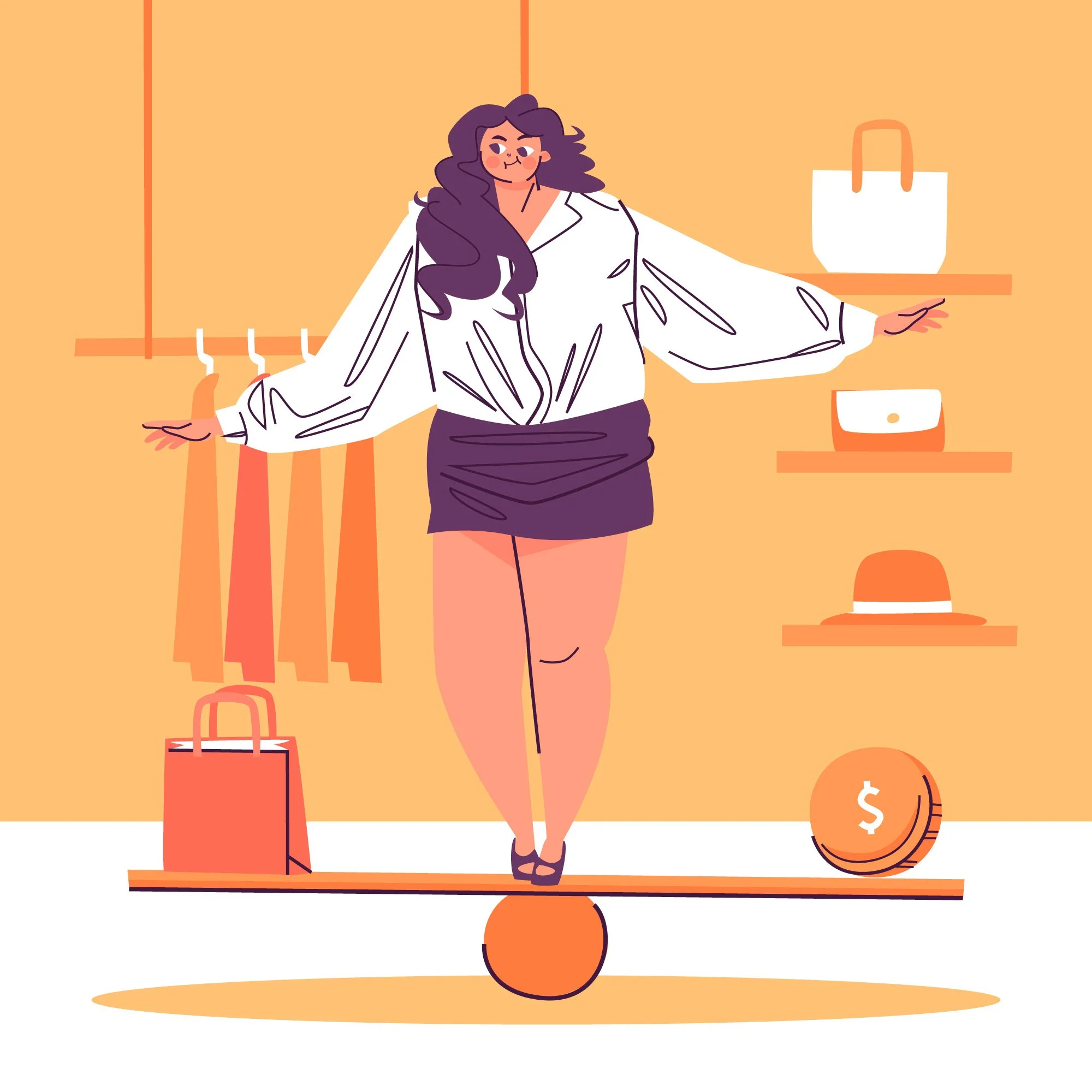
In the 1920s, a theory began circulating that sounds as though it was invented over dinner by a group of economists and designers: skirt lengths could predict the state of the economy.
The idea is commonly attributed to George Taylor, an economist and professor at the University of Pennsylvania. His observation was relatively simple. During periods of prosperity, skirts tended to become shorter. During times of economic uncertainty, they became longer.
According to the theory, fashion was not following the economy. Rather, both were responding to the same collective mood. When confidence, optimism, and a sense of abundance prevailed, people were more willing to take aesthetic risks. When uncertainty emerged, more conservative and restrained styles tended to dominate.
Over time, the hypothesis gained popularity because it appeared to align with certain historical moments. The Roaring Twenties, marked by economic growth and profound social change, brought with them the iconic flapper silhouette. Decades later, observers pointed to periods of crisis that seemed to coincide with longer, more subdued hemlines.
The problem, of course, is that history is rarely that tidy.
Today, the Hemline Index is regarded more as a cultural curiosity than a serious economic indicator. Studies conducted over the years have failed to find consistent evidence of a direct relationship between the length of a skirt and economic performance. Fashion responds to far too many variables at once: cultural movements, technological developments, social transformations, celebrity influence, media exposure, and individual creative decisions.
Yet the fact that this theory continues to resurface is revealing in itself. Not because skirts can predict a recession, but because they remind us of something more interesting: economies do not express themselves solely through markets. They also manifest in the ways societies imagine the future, construct aspirations, and choose to present themselves to the world.
Perhaps George Taylor was wrong about skirts. But he may have been right about something else—something we continue to observe a century later: economic shifts often leave cultural traces long before they appear in a financial report.
The Lipstick Index
If the Hemline Index attempted to read the economy through fashion, the Lipstick Index sought to understand it through consumption.
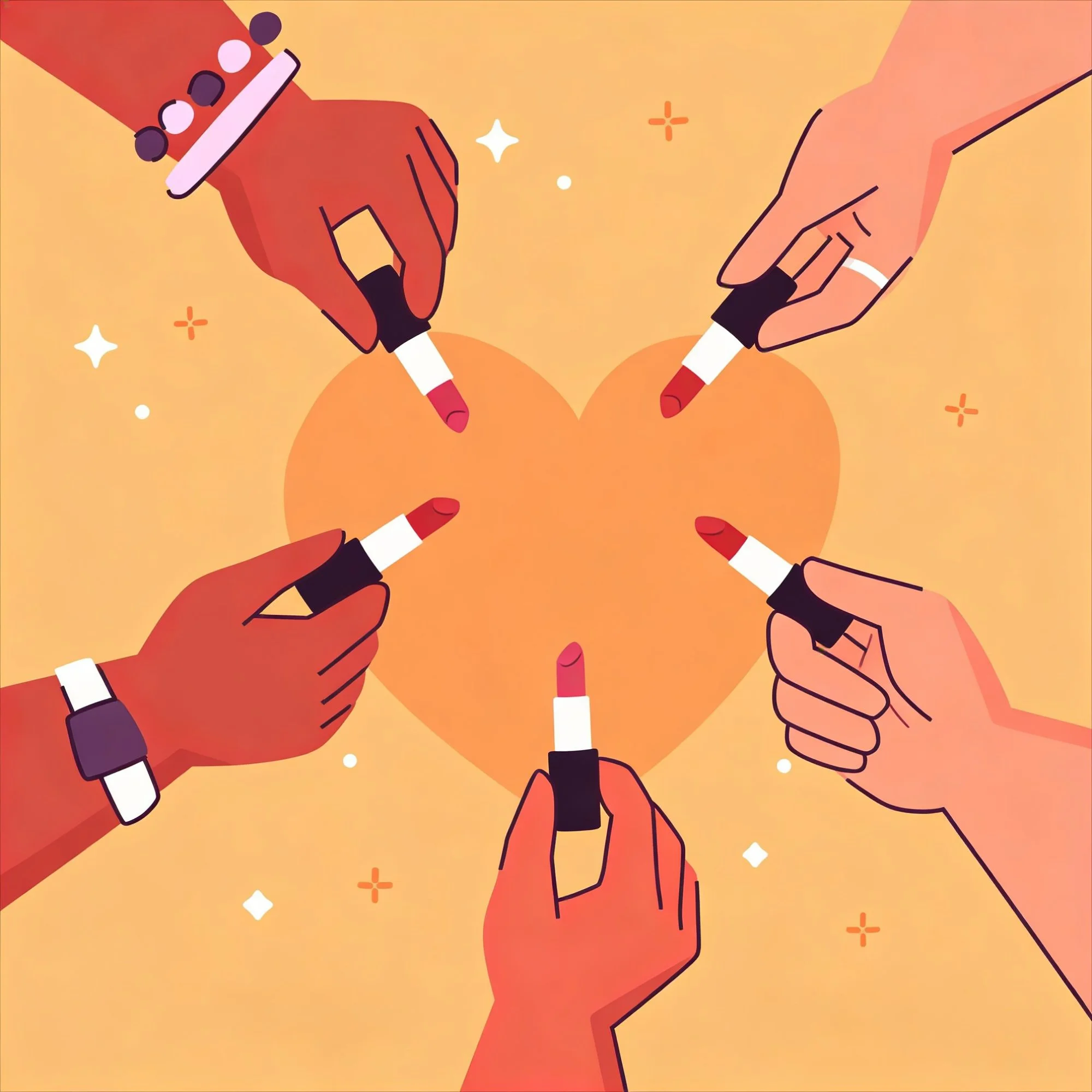
The theory was popularized in 2001 by Leonard Lauder, then chairman of Estée Lauder. As the U.S. economy slowed following the dot-com crash and the September 11 attacks, Lauder noticed something curious: while many consumers were cutting back on major purchases, lipstick sales appeared to remain strong—and in some cases, even increase.
His explanation was straightforward. When economic uncertainty forces people to postpone larger purchases—a new car, a vacation, a luxury handbag—they still seek small forms of gratification. A lipstick, a fragrance, a face cream, or even a good cup of coffee can offer an accessible dose of comfort at a time when other luxuries feel out of reach.
Over time, the so-called Lipstick Index became one of the most widely discussed theories in consumer culture. Not because it proved a perfect economic correlation, but because it captured something deeply human: even in difficult times, people do not stop seeking pleasure, beauty, or a sense of normalcy.
As with many of these indicators, the academic evidence is mixed. Subsequent studies have found that the pattern does not always repeat itself and that different generations respond to economic downturns in different ways. In some periods, cosmetic sales rise; in others, consumers gravitate toward home goods, entertainment, or personal wellness products instead.
Yet the true value of the theory was never found solely in the numbers. Its significance lies in what it reveals about human behavior. When resources feel more limited, people do not necessarily stop consuming. What changes is the meaning they attach to their purchases.
A luxury handbag may become an impossible expense to justify. A lipstick, on the other hand, can feel like a small act of optimism.
Because in times of economic uncertainty, desire does not disappear. It simply changes scale.

The Old Money Phenomenon
Unlike the Hemline Index or the Lipstick Index, the Old Money phenomenon did not emerge from economics. It emerged from the internet.
Over the past few years, platforms such as TikTok, Pinterest, and Instagram have become saturated with images that look as though they were taken at a private club in the English countryside: linen shirts, sweaters draped over shoulders, understated watches, historic homes, libraries, immaculate white sneakers, and an almost complete absence of logos.
The aesthetic has gone by many names—quiet luxury, stealth wealth, old money—but they all revolve around the same idea: luxury that does not need to announce itself.
What makes the phenomenon particularly interesting is that it emerged at a moment when social media seemed to have pushed conspicuous consumption to its limits. For years, much of digital culture was dominated by displays of wealth, travel, shopping, luxury cars, and carefully curated lifestyles. Yet when a trend reaches its extreme, it often creates the conditions for its own backlash.
And the backlash was silence. Almost overnight, the aspiration shifted. The goal was no longer to appear wealthy. The goal became to appear stable. The distinction is subtle, but important. Conspicuous consumption speaks of accumulation. Stability speaks of permanence. The first demands to be seen. The second can afford to go unnoticed.
This is why much of the Old Money aesthetic revolves around symbols of continuity: timeless clothing rather than fleeting trends, durable materials rather than constant novelty, and activities associated with leisure and tradition rather than accelerated consumption. It is not necessarily about wealth. It is about projecting the sense that time is on your side.
Pierre Bourdieu argued that social classes are distinguished not only by what they possess, but also by their tastes, habits, and ways of engaging with the world. From that perspective, the Old Money phenomenon can be understood as a pursuit of symbolic capital rather than economic capital.
What people are imitating is not a bank account. It is a narrative. The narrative of someone who has nothing to prove.
That may explain why this aesthetic gained so much momentum during a period marked by inflation, economic uncertainty, and digital fatigue. In a world where everything seems to be accelerating, the real aspiration is no longer excess.
It is the feeling that something endures. And while most people who embrace this aesthetic do not own inherited estates or centuries-old fortunes, the desire it expresses is very real.
It is not a desire for wealth. It is a desire for stability.
Recession Nails
If someone had suggested twenty years ago that nail trends could become an economic indicator, they probably would have been dismissed outright. Yet the internet has a remarkable talent for spotting patterns in places no one thought to look.
In recent years, a theory known informally as recession nails began circulating on TikTok. The observation was simple: after several years dominated by long nails, elaborate nail art, crystals, intricate designs, and frequent salon appointments, a much more understated aesthetic began to gain traction.
Short nails.
Nude tones.
Classic French manicures.
Sheer finishes.
Manicures that appeared to require very little effort.
The most immediate explanation was economic. Elaborate nail designs require time, maintenance, and ongoing investment. During periods of financial uncertainty, recurring expenses are often among the first things people choose to reduce. From this perspective, minimalist manicures could simply be seen as a practical adaptation to a more restrictive economic environment.
But as with most trends, the story is probably more complicated than that.
The same platforms that popularized recession nails were also promoting ideas such as quiet luxury, the clean girl aesthetic, and understated elegance. Suddenly, sophistication was no longer associated with the accumulation of details. Instead, it became linked to simplicity, visual restraint, and an appearance of effortless naturalness.
What makes this particularly interesting is that naturalness is rarely entirely natural.
A subtle manicure is still an aesthetic choice.
Glowing skin is still an aesthetic choice.
Quiet luxury does not eliminate status symbols; it simply makes them less obvious.
In that sense, recession nails may have less to do with saving money and more to do with a broader cultural shift. They reflect a moment in which many people began valuing the appearance of ease over the appearance of effort. What was once communicated through excess is now communicated through restraint.
Does this mean nail trends can predict a recession? Probably not.
But they do reveal something interesting about the cultural mood of a particular moment. When aspirations change, details change as well. And few things capture the spirit of an era better than the everyday rituals that seem too small to matter. At least until everyone starts doing them at the same time.

Luxury Tomatoes
Perhaps the strangest indicator on this list has nothing to do with skirts, cosmetics, or manicures.
It has to do with tomatoes.
And lemons.
And artisanal bread.
And vegetable gardens.
And all those images that suddenly began appearing in campaigns from some of the world's most aspirational brands.
For years, luxury was associated with a fairly predictable set of codes: exclusivity, glamour, sophistication, cosmopolitan cities, immaculate hotels, sports cars, and objects inaccessible to most people.
Then something curious began to happen.
Campaigns started filling with local markets, rustic kitchens, imperfect vegetables, family tables, baskets of fruit, and agricultural landscapes. We saw it in fashion editorials, luxury advertising, and a digital aesthetic increasingly obsessed with slow living, cooking, gardening, and craftsmanship.
At first glance, it seems contradictory. Why would a brand selling products worth thousands of dollars choose to photograph tomatoes? Because it is rarely selling tomatoes. It is selling meaning.
Roland Barthes argued that objects function as systems of signs. Beyond their practical purpose, they communicate ideas, values, and aspirations. From this perspective, a tomato is not simply a tomato.
It is a symbol of something else.
Time.
Authenticity.
A connection to nature.
Simplicity.
A life that feels slower and more human.
In a culture saturated by screens, algorithms, and digital consumption, these symbols acquire an unexpected value. What once seemed ordinary begins to feel scarce. And in the world of luxury, scarcity has always been a source of value.
That may be why fruit, gardens, and kitchens have become new objects of desire. Not because people genuinely wish to grow all their own food, but because these images represent something increasingly difficult to obtain: the feeling of having time.
Time to cook.
Time to share a meal.
Time to do things slowly.
In that sense, tomatoes are not a recession indicator.
They are something far more interesting. They are an indicator of longing. They remind us that trends reveal more than what a society buys. They also reveal what it feels it is missing. And sometimes, what is missing most is not money. It is time.

Economies change in charts. Societies change in symbols.
Long before quarterly reports are published, growth forecasts are revised, or headlines begin warning about inflation, people start making small adjustments to their everyday lives. They change what they buy. They change how they dress. They change what they consider elegant, desirable, or worthy of admiration.
Some of these shifts are so subtle that they barely register. They appear in a more understated manicure, a longer skirt, the unexpected appeal of a linen shirt, or the photograph of a perfectly imperfect tomato in a luxury campaign.
On their own, these phenomena do not explain an economy. Nor can they predict a recession with the precision of a financial model. Yet they reveal something that data often takes longer to capture: the mood of an era.
Consumption has never been merely an economic activity. It is also a form of communication. Through objects, trends, and aesthetics, people express their aspirations, their anxieties, and their expectations about the future.
Perhaps nails, skirts, and tomatoes do not predict a recession. But they do reveal something equally important: how a society feels when it senses that the world is changing. And sometimes, understanding that feeling can be just as valuable as understanding the numbers.
